Second:

Care for Caregivers

Second:

Care for Caregivers

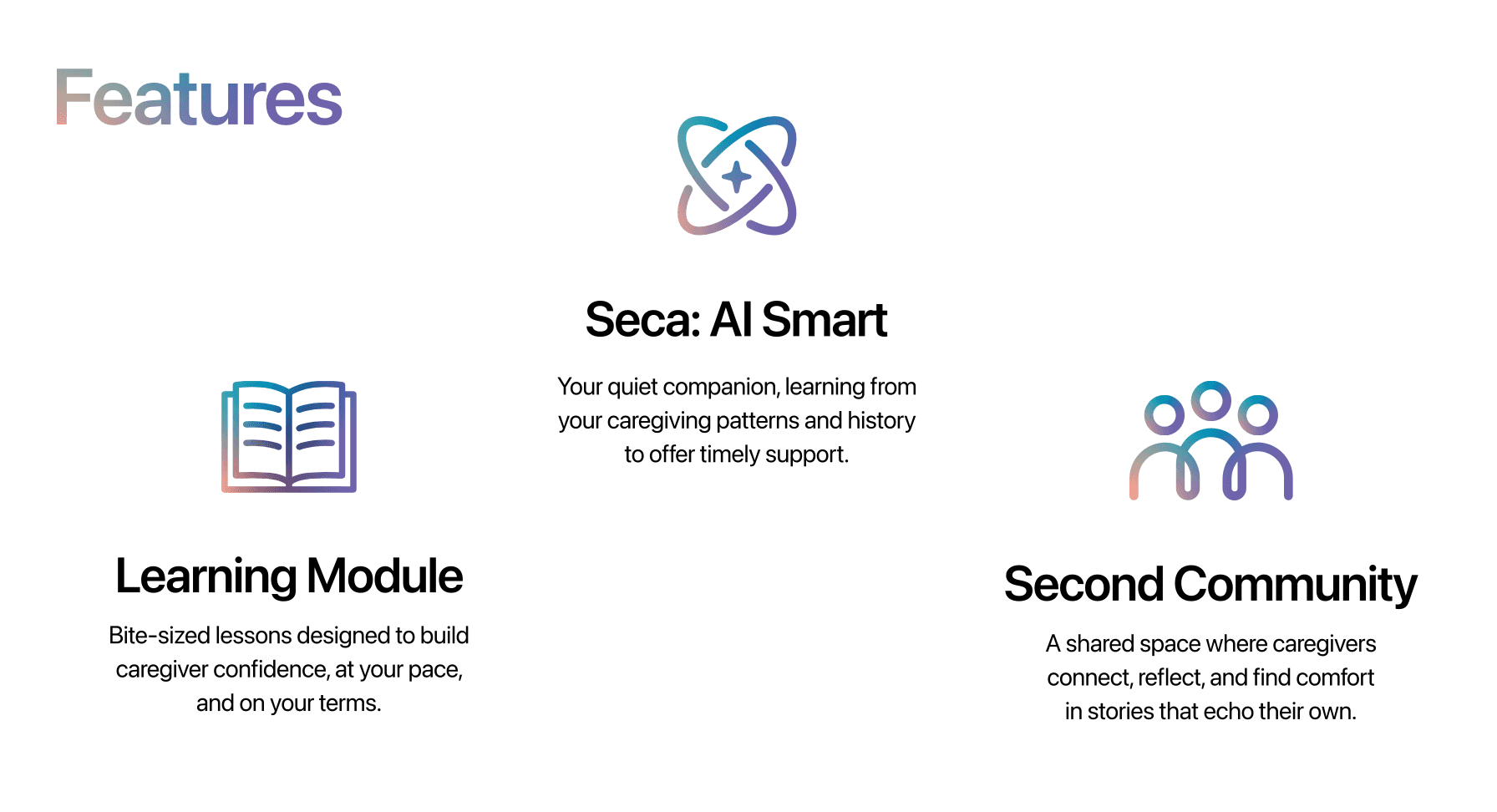
A caregiver-first platform designed to strengthen caregiver confidence through adaptive guidance, education, and community.

A caregiver-first platform designed to strengthen caregiver confidence through adaptive guidance, education, and community.

My Role

My Role

UX Research
Product Strategy
Co-Design Facilitation

UX Research
Product Strategy
Co-Design Facilitation

Affiliation

Affiliation

Microsoft

Microsoft

In Collaboration With

In Collaboration With

Alzheimer’s Foundation of America
Alzheimer’s Association
NYU Steinhardt

Alzheimer’s Foundation of America
Alzheimer’s Association
NYU Steinhardt

Timeline

3 months

Research Methods

Research Methods

Expert Interviews, Caregiver Interviews

Co-Ideation Workshops, Field Observation

Expert Interviews, Caregiver Interviews

Co-Ideation Workshops, Field Observation

Industry

Industry

Healthcare

Healthcare

Project Type

Project Type

Healthcare Design, Service Design
Digital Product Design

Healthcare Design, Service Design
Digital Product Design

Team

4 Designers

Overview

A supportive space that lightens caregiver burden through guidance, learning, and a community that understands.

A supportive space that lightens caregiver burden through guidance, learning, and a community that understands.

Background

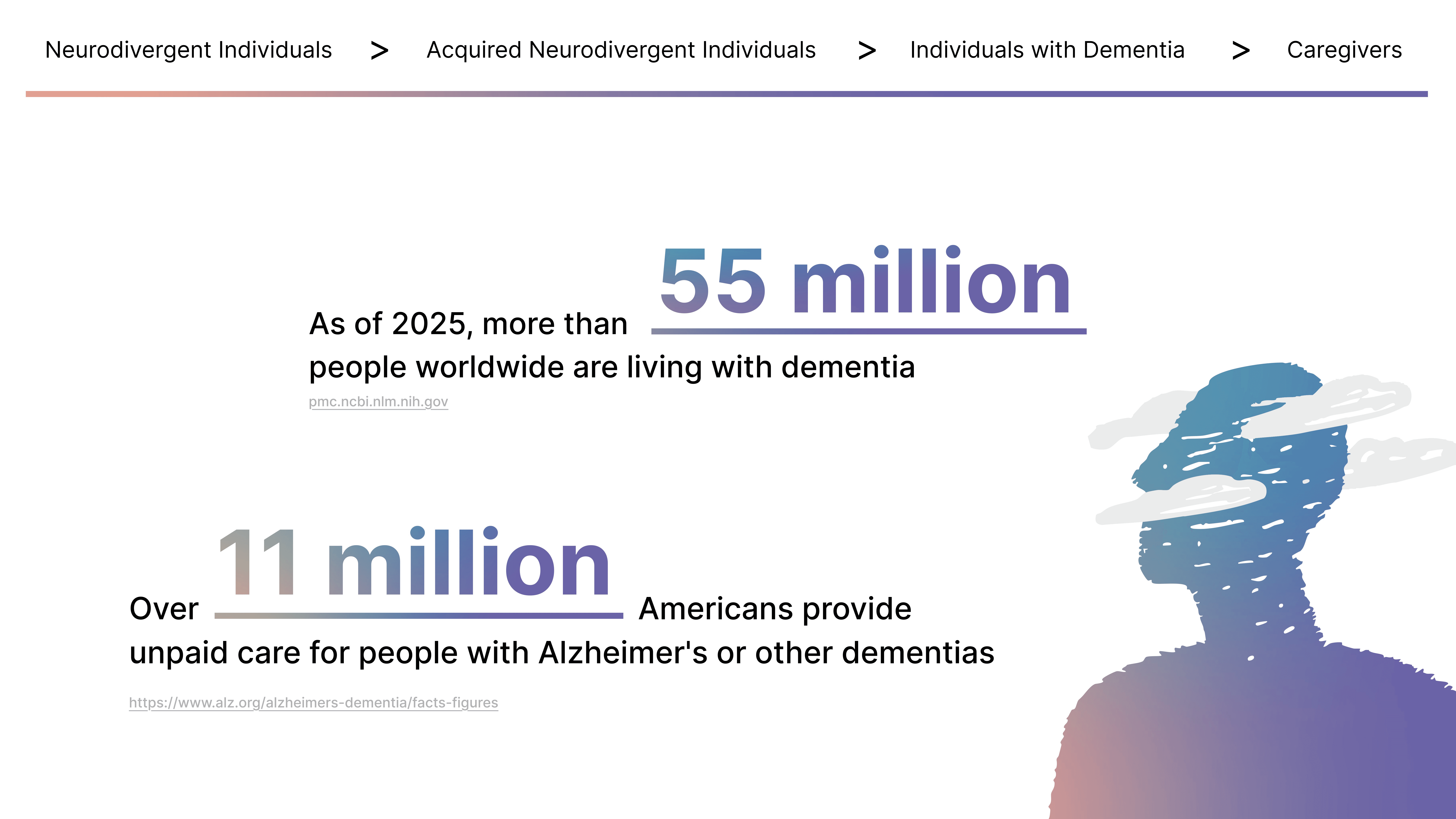
Dementia affects over 55 million people globally, placing intense emotional and logistical pressure on those providing daily care. Caregivers often navigate fragmented systems, limited support, and constant uncertainty.

Research Goal


Our goal was to understand caregivers’ emotional load, daily decision-making challenges, and unmet needs to design a system that meaningfully supports their journey rather than the patient alone.

Outcome


We developed a caregiver-first platform offering adaptive guidance, bite-sized learning, and community support, shaped entirely by qualitative research across experts, organizations, and care partners.
Why Caregivers?

Caregivers carry the heaviest emotional and decision burden in dementia care, yet most tools overlook them. Supporting caregivers directly improves stability, confidence, and the patient’s overall quality of life.

Research Process

Exploring the ecosystem

of dementia care

Exploring the ecosystem

of dementia care

Our research process integrated literature review, netnography, field observations, and interviews with caregivers, experts, and organizations to build a grounded understanding of dementia care. We investigated how emotional strain, fragmented information, and inconsistent support systems shape the everyday realities of caregivers.

Collecting Data Using

Qualitative Research Methods

Collecting Data Using

Qualitative Research Methods

We used immersive, human-centered qualitative methods to observe how caregiving unfolds emotionally, spatially, and socially. Each method provided a different lens into the realities of dementia care.

Observed a Dementia-Friendly Apartment

We visited a dementia-friendly apartment to study environmental adaptations, contrasting colors, memory cues, spatial layout, and safety features. These observations helped us understand what caregivers must manage in the physical environment and what design interventions can reduce confusion or fall risks.


Interviewed Organizations, Experts, and Families

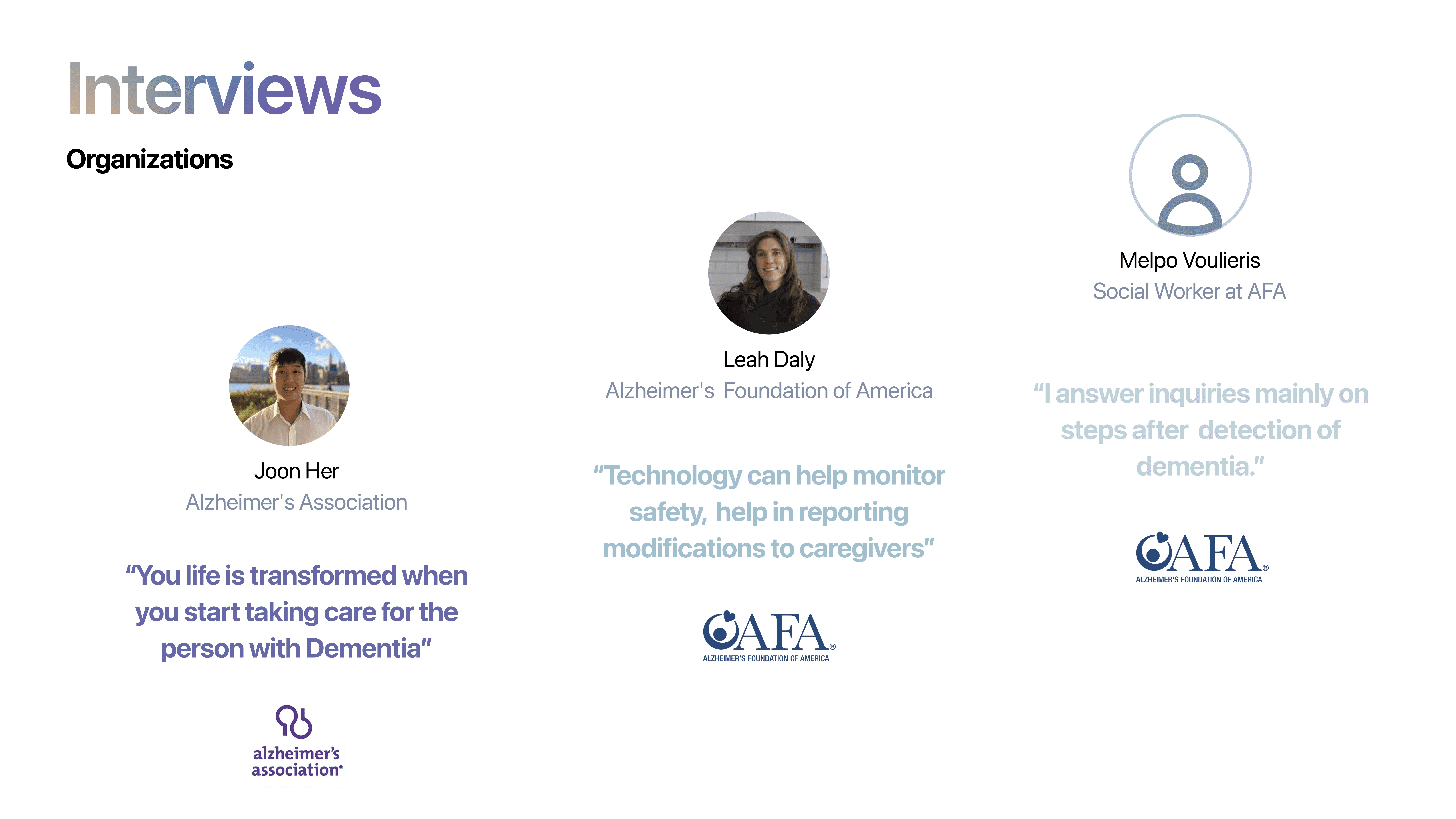
We spoke with Alzheimer’s organizations, occupational therapists, social workers, and multi-generational caregivers to understand their routines, responsibilities, and system-level frustrations.

We used immersive, human-centered qualitative methods to observe how caregiving unfolds emotionally, spatially, and socially. Each method provided a different lens into the realities of dementia care.

Observed a Dementia-Friendly Apartment

We visited a dementia-friendly apartment to study environmental adaptations, contrasting colors, memory cues, spatial layout, and safety features. These observations helped us understand what caregivers must manage in the physical environment and what design interventions can reduce confusion or fall risks.


Interviewed Organizations, Experts, and Families

We spoke with Alzheimer’s organizations, occupational therapists, social workers, and multi-generational caregivers to understand their routines, responsibilities, and system-level frustrations.

Analyse Data and

Interpret Findings

Analyse Data and

Interpret Findings

We compared stories across interviews to identify where caregivers struggle the most, moments of overwhelm, confusion about next steps, and the burden of remembering schedules, symptoms, and behavioral changes. These friction points became anchors for our design direction.

Isolated Patterns Across Caregiver Roles

By analyzing differences between primary and secondary caregivers, we identified shifts in responsibility, emotional load, and decision-making authority. This helped us understand which pain points were universal and which were role-specific.


Translated Findings into Opportunity Areas

We interpreted recurring patterns, like personalization needs, scattered information, and lack of emotional support to define three core opportunity areas: empowering caregivers through education, personalizing care routines, and carving out time and space for caregiver wellbeing.

We compared stories across interviews to identify where caregivers struggle the most, moments of overwhelm, confusion about next steps, and the burden of remembering schedules, symptoms, and behavioral changes. These friction points became anchors for our design direction.

Isolated Patterns Across Caregiver Roles

By analyzing differences between primary and secondary caregivers, we identified shifts in responsibility, emotional load, and decision-making authority. This helped us understand which pain points were universal and which were role-specific.


Translated Findings into Opportunity Areas

We interpreted recurring patterns, like personalization needs, scattered information, and lack of emotional support to define three core opportunity areas: empowering caregivers through education, personalizing care routines, and carving out time and space for caregiver wellbeing.

Design Implication

How might we

ease caregiver burden

by unifying guidance and support?

How might we

ease caregiver burden

by unifying guidance and support?

Co-Ideation Process

Brought Caregivers and Experts into the Room

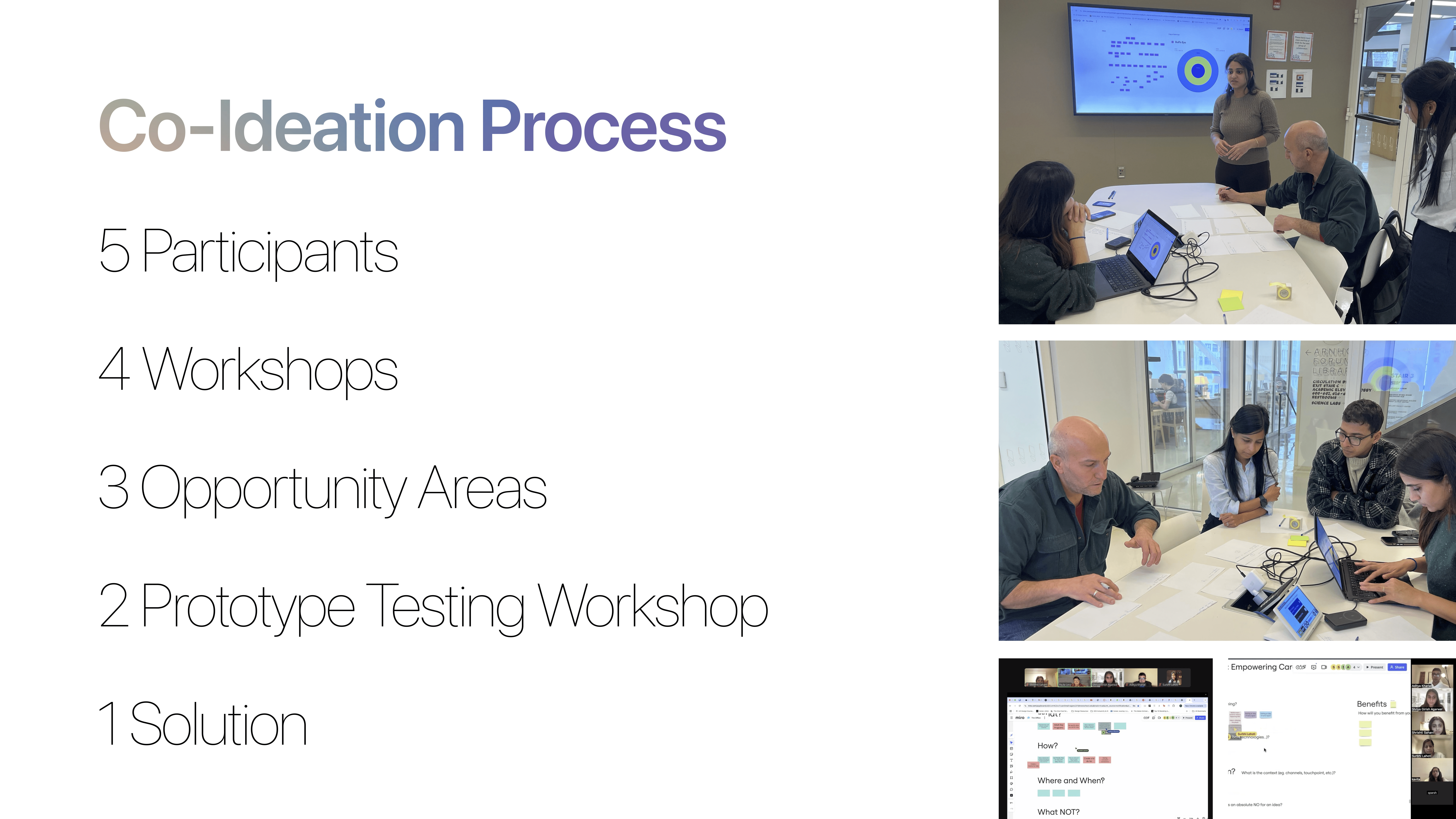
We hosted four co-ideation workshops with caregivers, students, and dementia experts to understand lived challenges and gather early design directions rooted in real caregiving experiences.

Translated Needs into Concept Directions


Participants mapped pains, ideal routines, and emotional triggers, helping us shape three opportunity areas: personalized care, accessible education, and emotional ease, each forming the foundation for concept development.

Iterated Through Prototypes and Feedback


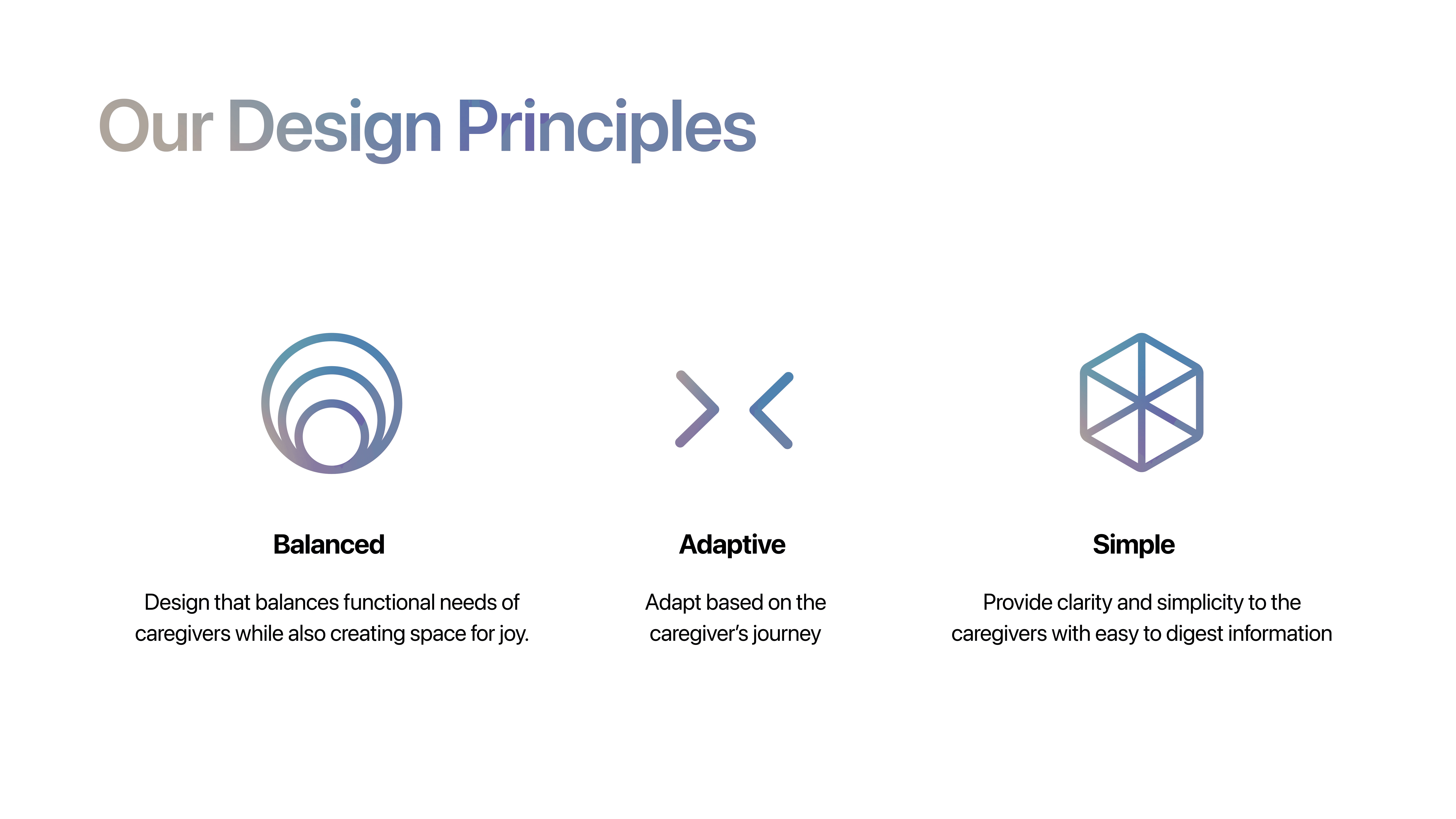
Two prototype-testing workshops refined clarity, tone, and task flows. Caregiver feedback emphasized the need for simplicity and adaptability, guiding refinements across content, interaction patterns, and overall platform behavior.

Next Steps

Next Steps

Partner with Dementia Care Experts

Collaborate with Hospitals and Clinics

Run Extended Caregiver Pilots

Refine Adaptive Guidance Models

Test Long-Term Engagement Patterns

Expand to Other Care Contexts


Partner with Dementia Care Experts

Collaborate with Hospitals and Clinics

Run Extended Caregiver Pilots

Refine Adaptive Guidance Models

Test Long-Term Engagement Patterns

Expand to Other Care Contexts

Takeaways

Takeaways

Co-Ideation as Insight Discovery

Working directly with caregivers and experts showed me how co-ideation can unlock nuances that traditional interviews often miss.

Learning Through Spatial Immersion


Visiting a dementia-friendly apartment helped me understand how environment, cues, and layout fundamentally shape caregiver workload and stress.

Interpreting Multi-Layered Narratives


Synthesizing perspectives across families, clinicians, and support organizations taught me how to navigate contradictions and extract opportunity areas without oversimplifying complex realities.

Co-Ideation as Insight Discovery

Working directly with caregivers and experts showed me how co-ideation can unlock nuances that traditional interviews often miss.

Learning Through Spatial Immersion


Visiting a dementia-friendly apartment helped me understand how environment, cues, and layout fundamentally shape caregiver workload and stress.

Interpreting Multi-Layered Narratives


Synthesizing perspectives across families, clinicians, and support organizations taught me how to navigate contradictions and extract opportunity areas without oversimplifying complex realities.

"At Second, care partners come first"

"At Second, care partners come first"

More Projects

I collect playing cards. I’m at 54 decks and counting…

© Shriya Agarwal 2025